
02 Sep , 2022 By : Monika Singh
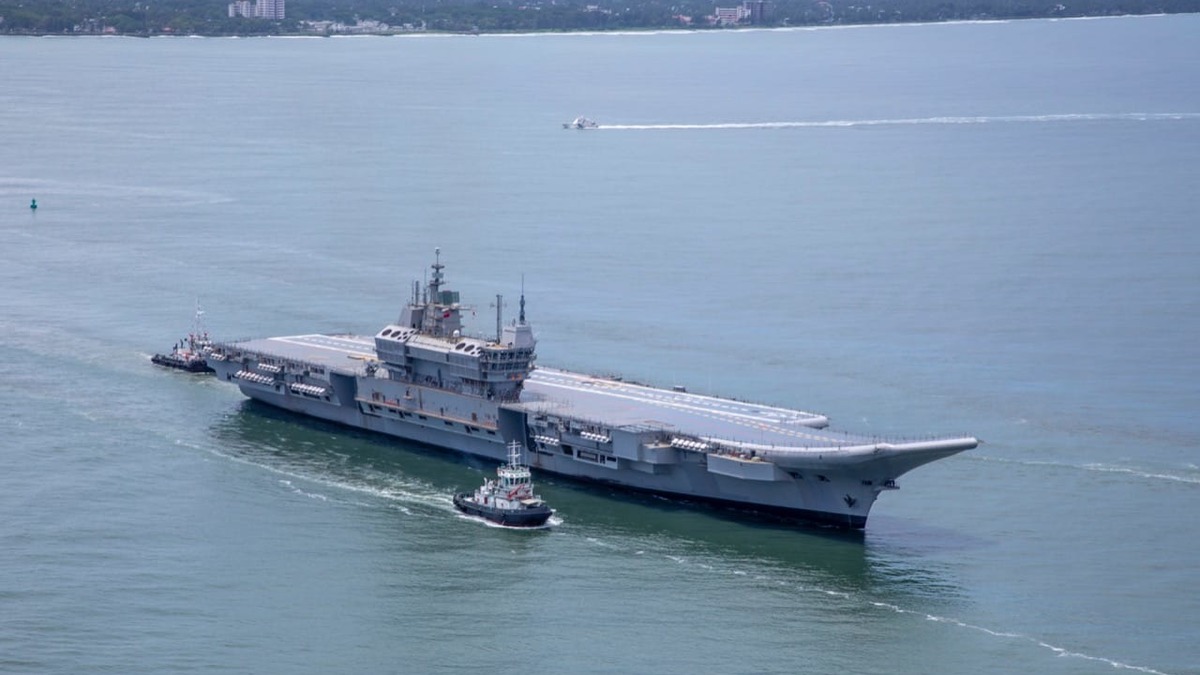
Finally, the Indian Navy got its first indigenous aircraft carrier – INS Vikrant, after Prime Minister Narendra Modi commissioned it on Friday (Sept 2, 2022). From IAC- 1 `Vikrant’, it is now formally INS Vikrant, named after her predecessor, the country’s first aircraft carrier which had played a vital role in the 1971 war.
While commissioning the new carrier which has state-of-the art automation features on board, and doing away with the colonial past PM Modi also unveiled the new naval ensign (Nishaan). And, now India will have two aircraft carriers which help in boosting maritime security of the nation.
With the commissioning of Vikrant, the navy has moved towards self-reliance in making aircraft carriers in the Indian shipyard and joined a niche group of nations who have the capability to design, build an aircraft carrier which is so large and which has a huge indigenous content.
Financial Express Online has reported earlier that the new aircraft carrier has machinery and equipment which has been supplied by the Indian industry as well as over 100 MSMEs.
Indigenous equipment and machinery is on board this carrier which has been supplied by the Indian industry and over 100 MSMEs.
Specifications as shared by Indian Navy
It is 262 m long and 62 m wide and displaces around 43000 T when fully loaded.
With an endurance of 7500 nautical miles it has a maximum speed of 28 knots. Just to make it simpler to understand, the carrier can go all the way from India to Brazil.
There 2200 compartments for the crew of 1600 and specialized cabins for the women officers and agniveers on board.
The new carrier has been designed with a high degree of automation for ship navigation and survivability and machinery operations. It comes with the latest technologies on board to deal with the emerging threats in the Indian Ocean Region (IOR).
Also on board will be a full-fledged state-of-the-art medical complex, fully equipped with the latest medical equipment. According to the Indian Navy the medical facilities available on board include physiotherapy clinic, ICU, laboratories, CT scanner, X-Ray machines, major modular OT, emergency modular OT, dental complex, telemedicine facilities, isolation ward and more.
Air wing
This aircraft carrier has the capacity to carry almost 30 aircraft and this depends on the operations it sets out to carry. Which means at any given time it could be a combination of MiG-29k fighter jets, Kamov-31 helicopters which are Russian origin, MH-60R multi-role helicopters which have recently been inducted in the India Navy from the US. And also on board will be India’s own indigenously built Advanced Light Helicopters (ALH) `Dhruv’ the naval version and in future plans the Light Combat Aircraft (LCA) naval version will be on board.
Short Take Off But Arrested Recovery (STOBAR)
INS Vikrant comes equipped with a ski-jump for launching aircraft, and there is a set of three ‘arrester wires’ which are used for the recovery of the aircraft on board.
More about Navy’s new aircraft carrier
It was designed by the Warship Design Bureau (WDB) of the Indian Navy and has been built by Cochin Shipyard Limited, which is a Public Sector Shipyard and is under the Ministry of Ports, Shipping & Waterways.
In April 2005, the foundation of IAC was set by ceremonial steel cutting.
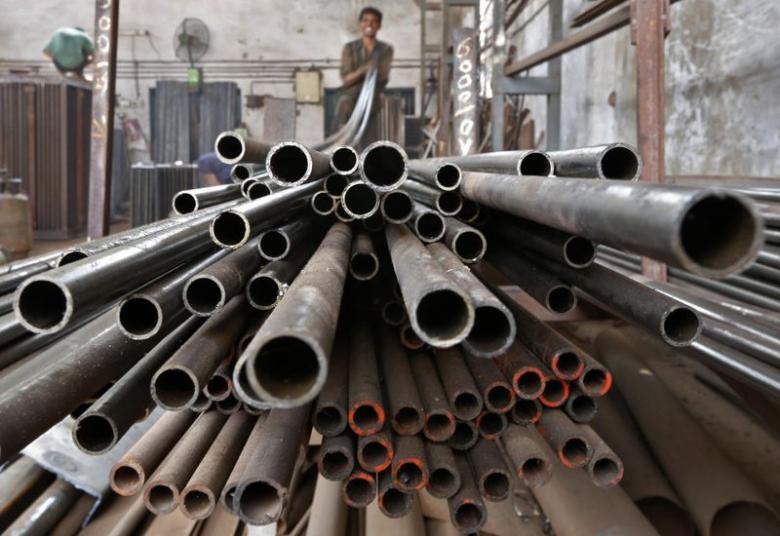
In the construction warship grade steel has been used which was indigenized in the country through collaboration between the Indian Navy, Defence Research and Development Organisation and Steel Authority of India Limited (SAIL). The fabrication of the hull started and the keel was laid in February 2009.
At a recent press conference in New Delhi, top officials while explaining the timeline said that first phase of the construction of the ship were done with the successful launch of the ship in August 2013.
Who attended?
During the ceremony Defence Minister Rajnath Singh, all the three service chiefs, dignitaries and top officials from the Ministry of Defence, Ministry of Shipping, and all stakeholders were present today.

































0 Comment