
26 Oct , 2021 By : monika singh
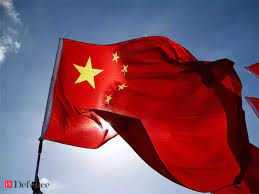
China's legislature, the National People's Congress, adopted a new Land Borders Law of the People's Republic of China on October 23. The new law comes into effect from January 1, 2022.
Since 1949, China has argued that the boundaries between it and India have never been formally delimited or demarcated. India has argued that while this may be true for some parts of the boundary, but not all portions, there has always been a traditional boundary between the two sides based on history, usage and custom. Naturally, the conception of such a boundary which each side holds does not match with the other's idea, giving rise to what India calls a "boundary problem".
Since the visit to China of India's former Prime Minister Rajiv Gandhi in December 1988, the two governments agreed to discuss a boundary resolution while ensuring that peace and tranquillity is maintained in the India-China border areas. While this was happening, the rest of the relationship, particularly in trade, investment, education, culture and technology, was allowed to proceed. In fact, it grew rapidly especially after 2001, when China became a member of the World Trade Organization. So much so, that by 2018 India was experiencing a trade deficit of almost $50 billion a year in its bilateral trade with China. Before too long, New Delhi realised that the playing field was heavily tilted against exports from India. Further, Chinese companies were investing in India through both the direct investment as well as portfolio routes. Indian firms too set up some operations in China, though not on the same scale.
Then, in early May 2020, China overturned the understanding reached during Rajiv Gandhi's visit which had held for more than three decades, by moving large numbers of troops with heavy weaponry to eastern Ladakh. By doing so, China was attempting to ensure that its ground position matched its boundary claims with India. What China was also doing was to violate all the bilateral agreements.
The first paragraph or article of nearly each of these agreements states that neither side will move large numbers of troops to the border without notifying the other side. China did not notify anyone of its troop movements in May 2020. Additionally, China was also signalling that she would settle the boundary through the use of force. Admittedly, China's military moves in May 2020 were of a marginal, 'testing the ground' nature. She had tested similar 'salami slicing' tactics successfully before in the South China Sea with no great alarm or pushback from the Southeast Asians. However, the pushback from India was much stronger and firmer on both military and diplomatic counts.


































0 Comment