
30 Nov , 2026 By : Shambhavi Mishra
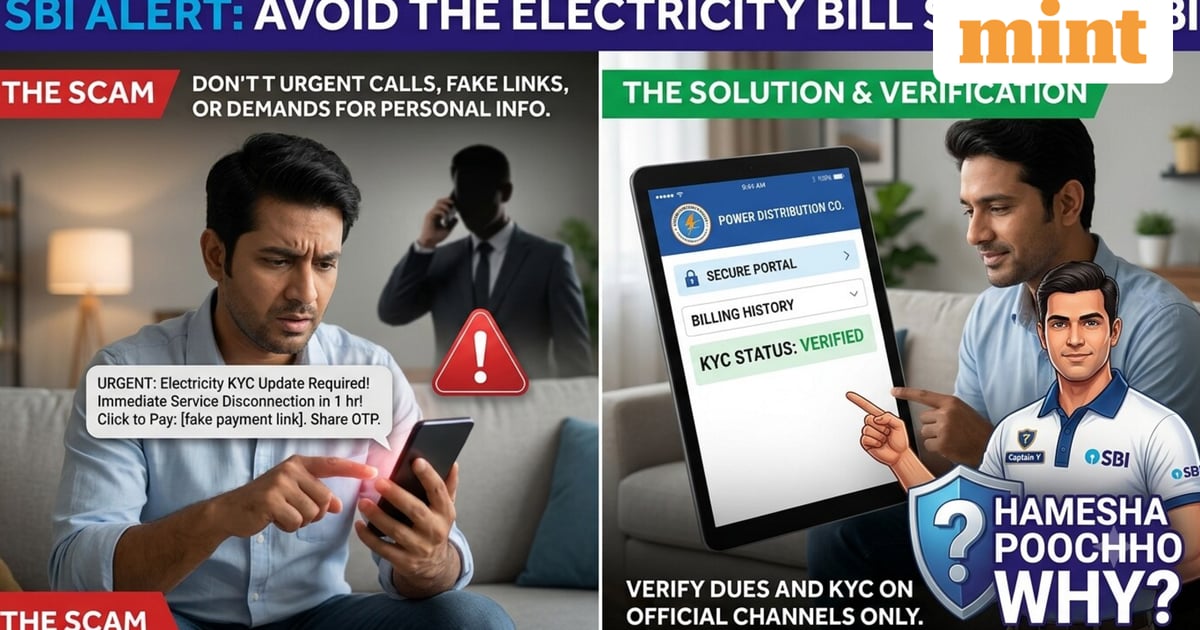
? Quick Take: State Bank of India has issued an urgent warning regarding fraudulent electricity bill messages and fake KYC calls targeting retail bank customers. Falling for these malicious payment links can instantly compromise your entire bank balance.
India's largest lender, State Bank of India (SBI), has sounded the alarm against a surging wave of sophisticated financial frauds involving fake electricity bill notifications and urgent KYC update demands. As retail banking moves increasingly online, cybercriminals are weaponizing routine utility communications to trap unsuspecting account holders into clicking malicious links that drain hard-earned savings within minutes.
The scam typically starts with an SMS claiming that your electricity connection will be disconnected tonight because the last month's bill remained unpaid. Panic sets in immediately. The recipient is urged to call a rogue mobile number or click a sleek, fraudulent APK or payment link.
Once the user interacts with the link or shares remote-access permissions disguised as customer support, scammers bypass multi-factor authentication. What looks like a simple Rs 50 power bill clearance instantly snowballs into unauthorized debit transactions worth lakhs. It is a stark reminder that digital convenience remains vulnerable to social engineering.
Fraudsters know that nearly every household receives monthly utility bills, making this tactic universally applicable and alarmingly effective. Unlike complex investment scams, utility threats play on basic human anxiety over essential services like electricity being shut off abruptly.
Banking regulators and law enforcement agencies have repeatedly flagged how cyber syndicates exploit trusted institutional identities. By mimicking electricity boards and major commercial banks simultaneously, these threat actors create an artificial sense of urgency that clouds rational judgment.
Source Attribution: Originally reported by gnews-investing (https://news.google.com/rss/articles/CBMilAJBVV95cUxORk5kb3FKSUp3VTdIb0JsUksyeEhncWRDcWx0OFBzSXVvUWZ6cWV3UC1lVllPRmdBWExOMVRhdEtMakUtM0NOTFZtOXlTeG1fWmxDaU55Q19VdUdDR012YWR2MG5JTzNfa1NRTEdKekJ4bEJ4OEdCSENhNldlb2kyNzdkQXRGZUtsT3I1azhlYlZjVGFqcFRQbXV0MFB1NEs1RXhObUVic2hzUVB5YWZCT19za2FuOHNQRFRNbzJPWjJacWRpd2lTalhVclNVbngzTk1yQ1g1bFRXbVVLOHpXb05HYXducXVXajc1eVJlOUlnTVJlc0N3WnRoNi1fSGFXbU9tOFFyM3RRMk1SeEMzZFhHeWI?oc=5).
Disclaimer: The financial, market, and corporate developments published above are reported for informational and educational purposes only. GrowMudra does not provide investment advice or stock recommendations. Readers are strongly advised to consult a SEBI-registered financial advisor before making investment decisions.































0 Comment