
24 May , 2021 By : Kanchan Joshi
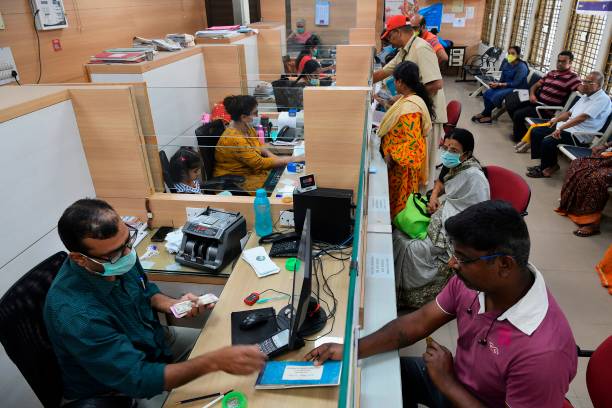
MUMBAI: Shares of public sector banks have had their best ride recently ever since the government decided to fix their legacy bad loan problems through a bad bank in February this year. The Nifty PSU bank index has surged 20% since budget day, outshining the broader market and even private sector peers.
Besides the bad bank panacea, several positive factors have come together simultaneously to give public sector banks a boost. Lenders have fixed their capital over the past one year and hacked away at their corporate toxic loan load. Mergers have made balance sheets acquire more heft to handle additional stress. But investors should not miss the forest for the trees.
There are five hidden red flags that they need to keep an eye on:
Writing off the wall
The balance sheet healing over the past one year despite the pandemic has been on the back of large write-offs. To be sure, public sector banks have brought down their bad loan pile with the help of write-offs. In FY20, nearly a quarter of the bad loans were written off. Write-offs are not a sign of a strong balance sheet. The recovery from written off accounts are less than 30% for public sector banks, barring a few stray cases where the loss is lower. State Bank of India (SBI) wrote off roughly Rs32,000 crore worth of loans in FY21, which was 23% of its bad loan pile. Its peers may follow a similar trend too.
Forbearance blindfold
Regulatory and judicial forbearance are two big factors behind the stellar improvement in the asset quality of public sector lenders. The Reserve Bank of India (RBI) gave a six-month moratorium to borrowers last year due to the pandemic. Banks were not required to label these accounts as bad simply because they were not paying their dues. While this was justified due to the pandemic and the lockdowns last year, the judicial forbearance masked stress to a great extent. The Supreme Court had mandated that banks cannot label bad loans as such, which hid the stress after the moratorium period was over. To be sure, most lenders revealed their actual bad loan position through proforma bad loan ratios and some even made provisions towards them. One more forbearance is given through restructuring. Borrowers whose loans are restructured were earlier supposed to be classified as non-performing but this has been removed for those restructured due to the pandemic.
The ticking SMA time bomb
A look at the special mention accounts (SMA) of big lenders shows that new stress is building up. Notwithstanding the handholding during the first wave of the pandemic, small businesses are finding themselves challenged yet again on revenues and margins. This puts pressure on their repayment capacity. SBI’s SMA accounts where repayments are overdue for more than a month totalled Rs11,519 crore. In their disclosures during qualified institutional placement of shares, Bank of Baroda and Punjab National Bank also showed a considerable build-up of these accounts. SMA loans are early signals of stress and some lenders prefer to provide proactively against such defaults.
The flagging loan growth
While asset quality is by far the most important for banks to keep their earnings secure, loan growth is the backbone of a bank’s business. Credit growth of the banking industry has been decelerating fast over the past decade. Before the pandemic, loan growth had dropped to 6.02% for FY20 from double digits in the previous years. In FY21, loan growth was a mere 5.58%. What’s more is that much of this loan growth has been cornered by private sector banks. Public sector lenders have seen a sharper erosion of their loan growth. For some lenders, it has been a year of loan book contraction. This trend is expected to reverse in the current year. While year-on-year loan growth may look pleasing given low base of last year, the share of lenders in overall disbursements during the year needs to be watched.
Beyond the rosy arithmetic
Much of the good looking percentages that represent bad loans, loan growth and even profits for public sector banks are simply because of a low base. To be sure, a low base applies for all banks and public sector lenders are not outliers. However, compared with other peers, the exaggeration in their numbers would be higher given the extent of the blow suffered on balance sheets due to the pandemic and in the years before it. Beyond these percentages, investors need to keep an eye on the trend in upgrades and recoveries of bad loans. Further, a lot will depend on whether public sector banks are able to get back some of the lost share in loan disbursements. Merged balance sheets give them enough heft to do so.
The surge in shares of public sector banks is not unusual since lenders have demonstrated an improved loan book, in quality terms. To be sure, the rally is outsized also because they were the most beaten down stocks last year when the pandemic struck. That said, with the second wave impacting the real economy, lenders cannot be expected to go unharmed.


































0 Comment