
30 Oct , 2026 By : Shambhavi Mishra

Recent political developments often hinge on fractional moments, half-heard remarks, and instantaneous reactions that reverberate across national media channels. At a high-profile public event in Patna, a seemingly explosive exchange involving Congress President Mallikarjun Kharge and Prime Minister Narendra Modi captured the headlines. However, as fresh details emerge from the ground, the narrative reveals a starkly different reality—one rooted in miscommunication, truncated audio, and a heckle that was fundamentally misunderstood.
Political rallies and public addresses in India are high-octane environments where every syllable uttered by national leaders is scrutinized by opponents, supporters, and the 24/7 news cycle. The incident in question unfolded during a charged public gathering in Patna, Bihar, where political tensions are naturally elevated due to shifting state dynamics and forthcoming electoral battles. In large auditoriums and open-air venues, ambient noise, acoustic challenges, and cross-talk frequently create fertile ground for misunderstandings.
Historically, political discourse in the country has often been punctuated by sharp rhetorical exchanges between the ruling dispensation and the principal opposition. When high-ranking leaders take the podium, the margins for rhetorical error are minuscule. The Patna event quickly escalated when a remark from the audience prompted an immediate, sharp retort from Congress President Mallikarjun Kharge, setting off a domino effect of accusations regarding alleged insults directed at the Prime Minister.
While the immediate controversy centers around political rhetoric rather than corporate earnings or macroeconomic policy indicators, market stability and investor sentiment are intimately tied to political predictability and policy continuity. Major financial institutions, foreign portfolio investors (FPIs), and domestic institutional investors (DIIs) closely monitor political friction points for potential impacts on legislative calendars, economic reforms, and governance stability.
In this context, public spats and parliamentary standoffs can occasionally introduce short-term volatility into benchmark indices like the BSE Sensex and NSE Nifty 50. Analysts suggest that while headline-driven political noise generates heavy media traction, sustained market performance ultimately relies on structural fiscal policies, corporate earnings growth, and robust capital expenditure frameworks rather than isolated rhetorical clashes.
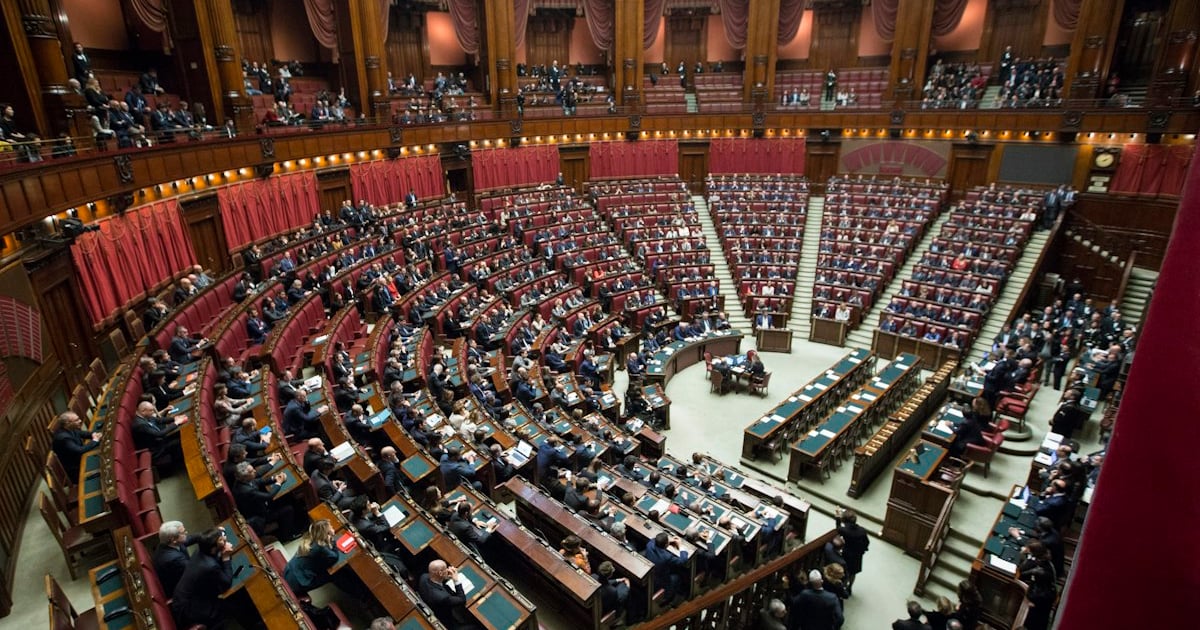
Political friction and heated exchanges between national figures frequently translate into prolonged legislative gridlocks, which can indirectly influence key sectors such as infrastructure, banking, defense, and public sector undertakings. When political parties lock horns over symbolic issues, policy debates in parliamentary committees or legislative sessions can face delays, impacting regulatory timelines and sector-specific reform implementation.
For retail investors and wealth managers, distinguishing between actionable economic policy shifts and political theater is paramount. While media networks amplify ideological battles, market participants remain focused on underlying economic indicators, corporate balance sheets, and capital allocation trends that drive long-term wealth creation across Indian equities.
As the fallout from the Patna event continues to unfold across news channels and social media platforms, political stakeholders are recalibrating their communication strategies ahead of upcoming electoral milestones. Observers will be closely watching how opposition parties and the ruling coalition frame their respective narratives regarding respect, governance, and public accountability.
For the financial community, upcoming macroeconomic data releases, monetary policy reviews by the Reserve Bank of India (RBI), and corporate earnings seasons will remain the primary drivers of market direction. Investors are advised to maintain a disciplined, long-term perspective, insulating their portfolios from the transient noise of daily political controversies.
Source Attribution: Originally reported by ndtv-top (https://www.ndtv.com/india-news/a-heckle-that-wasnt-a-half-heard-sentence-and-mallikarjun-kharges-baap-jibe-how-pm-modi-insulted-row-began-12234411).
Disclaimer: The financial, market, and corporate developments published above are reported for informational and educational purposes only. GrowMudra does not provide investment advice or stock recommendations. Readers are strongly advised to consult a SEBI-registered financial advisor before making investment decisions.

























0 Comment