27 Oct , 2021 By : monika singh
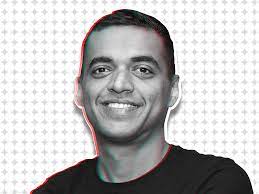
MUMBAI: Food-delivery and restaurant discovery platform
Zomato
NSE 1.26 %, which won in the prestigious Startup of the Year category at the Economic Times Startup Awards 2021, was chosen by the elite jury for executing a stellar debut on the Indian public markets, thereby aiding a crush of IPOs by new-age internet companies. Deepinder Goyal, cofounder and CEO of Zomato, said in an interview with ET that the company’s IPO earlier this year was not by design. Instead, it was a “desperate contingency plan” which had to be kicked off amid the worst crisis ever faced by the food-delivery major.
As Zomato battled the first wave of Covid-19 lockdown, a foreign direct investment (FDI) rule change which prohibited Chinese investors like Ant Financial from backing Indian firms came as a double whammy. The company was staring at a six-month cash runway, and an IPO seemed like the only option left on the table.
In an expansive interview, Goyal spoke to Samidha Sharma about Zomato’s IPO decision, diversification beyond food-delivery, M&As, its grocery play through Grofers, managing restaurant partners and riders on the platform, and his own journey as the founder of one of the buzziest internet companies in the country. Here are some edited excerpts:
This year was defining for Zomato because of how you broke the barrier between the private and public markets for Indian startups. The ET Startup Awards jury highlighted this point as being a standout one. What’s the IPO journey been like?
The IPO decision was because we didn't have any other choice, honestly! We saw a 90% drop in business after the first Covid-19 wave, and the company had six months of money left in the bank. The remainder of the funding from Ant Financial (existing investor) was not coming through (due to changes in FDI rules). While we were talking to many investors, nothing was materialising. An IPO was a desperate contingency plan, where we said it is okay if we are grossly undervalued at even $500 million, but we really need to raise $50 million. That was the start of the IPO conversation, and over time, things changed. When we decided to go public in the middle of last year, we had a lot of hurdles to cross, in terms of figuring out regulations. We worked very closely with the markets regulator Sebi, and found them to be very helpful and forward-looking. I hope it has become easier for other loss-making tech companies planning to go public now.
Did you say you had six months of cash left...
Yes, in April last year, revenues had vanished but much of the costs were intact – international operations, dining out, among others. Since the fundamentals of the business were strong, we knew that valuations are temporary and surviving this phase was important.
A few months later though you received a lot of investor interest. The Doordash IPO added to the positive sentiment. Were you tempted to stay private?
Our IPO journey had already started before the Doordash IPO. Even as we were doing all the work, the business started getting better and by December last year we had overshot pre-Covid-19 gross merchandise value (GMV). We didn’t think of scrapping the plan to go public. We had to list one day, and as the IPO plan progressed from month to month, it made even more sense to go ahead with it.
You can't manufacture timing; it is about being at the right place at the right time, and it's always a stroke of luck. We started our work one year ago and could not have timed the IPO. The market could have flipped a week before we finally listed, so we had no idea whether we were timing our IPO correctly or not. It is actually less about timing and more about luck. You can't time these things because there is a 12-month lead time.
What are the upsides, downsides and the challenges that have come your way from being a publicly listed company?
We are way more objective about the business than we used to be. I am not sure if that comes at the cost of long-term bets we could take. We are now trying to strike a better balance between the here and now, and the long-term future of the business. We are still calibrating our risk appetite in this new environment we find ourselves in.
When you say you are being objective does that mean you are not as go-for-broke and aggressive as you were before going public?
Our public company mindset has been on for more than a year. You become a public company the day you decide to go public, not the day you actually go public. I think we are more aggressive now than we were before going public. Look at the international markets -- they had slow growth but were profitable. However, we took the call to shut them last year. We wouldn't have taken such calls if we were still private. Should we have invested in the international business and made it high-growth? Are we being too conservative? These are questions we ask ourselves. It is about tackling multiple priorities at the same time versus doing just a few things very well. And now as a public company it’s about finding that balance. We are thinking about all this a lot more now.
Last week, there was uproar about a customer care executive telling a Tamil user that he needed to speak in Hindi for his request to be serviced. Seeing the outrage against Zomato on Twitter, you fired the agent and later reinstated her. Do you think you could have done things differently? There is obviously far more interest in the company now as it is public.
We are a brand which somehow attracts controversy, and people love to drag us into social media battles. Yes, we could have handled things differently. How? Not sure. Maybe by not reacting to any of this at all… there's no right answer here.
You have done a bunch of experiments and diversification but what is the overarching company strategy besides obviously the mainstay, which is the food delivery business?
Food delivery is the primary business and is doing well and growing. We need to make sure that we work hard to keep the food delivery business growing for the next few years. Outside of that, our dining out business has been shut but is starting to recover nowadays.
Food is what we will stay focussed on. It has humongous potential. We do not feel there is a dying need to expand to other businesses to fuel our growth. However, we are investing in some really good founders and companies — all in synergistic or adjacent areas to our business. We hope that over time, some of these companies and founders will choose to merge with Zomato to continue on their growth path. We are not asking any of these founders or companies for future M&A rights. We want chemistry to do the work here.
You’ve been sizing up, cleaning up businesses within Zomato. You took the call to shut international, nutrition and grocery in the run up to the IPO. What’s the reason for this? Is it to do with the ‘objectivity’ you spoke about?
Everything was happening in the run up to the IPO. If you are going to continue funding a business which doesn't have legs, it's actually a disservice to the people working in that vertical. They should be working on something else. Keeping that in mind, we don't let businesses linger when they shouldn't. In the process, we make sure that we are kind to the few people who lost jobs due to failed experiments. We look for jobs within the rest of Zomato, and if we really can't find something, we offer generous severances and help with recommendations to help them find other jobs quickly.
Having seen Zomato for so many years, going public has become the flagship event for the company. Before this, Zomato's always sort of been there, but never struck it so big...
The years when you say Zomato's always sort of been there, but never struck it so big, were actually our best years as a company. People had written us off, nobody was talking about us and we didn’t even want to create a splash. We don't like the media attention that we sometimes get. We would rather hide in a rabbit hole, put our heads down, and continue to work.
Only the people who are here to build empires think that this dilutes what a cofounder stands for. If you are building an institution, you wouldn't mind redefining some of these blocks.
Having transitioned from being a private company to a public one, how significant is team building and instilling a sense of ownership among employees?
People's ownership comes from two things -- one, the amount of ownership founders, their leaders and managers bring to the table. Second, your team will have higher levels of ownership if they have a leadership team they can trust.
It is a high-trust, high-ownership culture that drives ownership with more people, and it starts with me. I have to be able to demonstrate that our people are trustworthy, and that they can trust me. There is zero space for me to lie to our team. And I have to be on the ball as the first person to walk into the office and last one to go out, every single day. None of this changed as we became a public company. We are very adamant that we are going to preserve the foundation of our culture for as long as we live.
Why did you think you needed to do this?
Age happened along the way (laughs). I think empathy develops with age... also, at Zomato, the top 50-100 people know so much about each other, their lives, their needs and their wants. Everybody trusts each other fully, and we know that we have each other's backs. We switch roles seamlessly, as our designations are only meant for the outside world. They don't mean much inside.
But is that difficult to execute? Especially senior people coming from outside… how do they take to it?
It’s been this way for a few years and we’ve persevered with this culture. It’s not a simple thing to do especially when people are brought in from the outside. It has worked well for us till now, and I think we have tipped critical mass for maintaining this culture for the foreseeable future. For a scaled company to start doing something like this won’t work -- it has to be done over a long period of time and then it becomes a part of how the organisation works.
You don’t typically hire a lot of senior executives from outside. Is that going to change?
I don't agree with the question. I think we do hire a lot of senior executives from outside. Gaurav Gupta, Mohit Gupta, Akshant, Rahul Ganjoo, Damini – they were all hired from the outside directly into very senior roles, and all of them have been very successful here.
Tell me what’s happening with your on-again off-again grocery play and the significance of the investment in Grofers.
Grocery was an experiment for us. It wasn’t making sense both times so we shut it down. The customer feedback wasn't great, and we could not see many answers to the problems we were facing. In the meanwhile, the local-merchant-powered dark store network for 10-minute grocery delivery being developed by Grofers was getting insane love and traction from customers. So we decided to back our friends at Grofers. We are hoping that this develops into something more than a financial investment over time.
So what's Zomato’s strategy in grocery now?
We have a financial stake in Grofers. Our worst case scenario is that we have a financial investment that will give us some returns. Hopefully, it is not a financial but a strategic bet. And we'll see whether it makes sense for us to merge at some point or not. But right now it's too early to say anything.
Do you have integrations at all with Grofers?
Not really. We share learnings with each other, just like we would do that with other friendly startups. Grofers is using Zomato’s learnings on branding and marketing to its advantage. Our long-term hypothesis is that there will be more synergies at scale.
With so much happening in grocery and quick delivery space, this diversification is seen as a natural corollary for Zomato. Swiggy is going big here.
People have been talking about grocery business for the last three years, but nothing has fundamentally shifted. If we do something today or one year from now, life won’t be different for any grocery player. We are being patient, and hopefully smart here. The grocery market is way too big, so let people figure it out… we will eventually win because execution matters, timing is only one small part of the story.
And you won’t do grocery independently?
As of now, no. I don't make forever statements anymore (laughs). We are not ruling out doing this on our own, and if we get some new information which I don’t know today, I am open to changing our decision. We are paranoid about what we could be missing, but we have no egos to reverse our decision if we learn something new. We don't commit the sunk cost fallacy.
Are you looking at more acquisitions and strategic investments?
Always. If there are any interesting opportunities for us, we will certainly be interested.
Now with physical restaurants opening up, what are you seeing? Lot of restaurants have tried to go direct post Covid.
The restaurant industry has two parts -- food-delivery and dining out, and there is little overlap. The food delivery side thrived beyond September-October last year -- it was growing super fast. Economics changed for the business as discounts given out by restaurants had come down to effectively 9%, although it looks like it is far more. They are happy with us. Our restaurant NPS (net promoter score -- a loyalty metric) is very high, it is 48 on the restaurant side. I think there's scope to further increase this dramatically. There were restaurants which focussed on dining out but pivoted early on and also did well during the pandemic. Other restaurants which did not adapt to the times kept bearing heavy losses.
Restaurant owners who pivoted from being only-dining out to doing deliveries say business shrank for them substantially..
Of course, in any business, not everybody wins. Some people execute better than the rest. A lot of dining-out-centric restaurants shut down some of their most expensive locations, using their brand equity to generate business from dark kitchens. Even we shut our offices and terminated leases, as we did not know what it would be like going forward. If you live on next week’s hope and the hope never comes, then you are taking the wrong call. Mostly dining out businesses which did not want to learn a new business model, struggled. We tried to reach out to them, showed them recovery numbers expecting they would pivot to what was thriving, but some restaurants didn't listen to us.
What about commissions that you charge? Isn’t it like 25-30%, and it’s really come down?
We charge way less than the standards followed in the sector today and we did not shoot for parity last year due to Covid. The commissions are completely justified as a large part of our commission goes towards the cost we incur to deliver the orders. We believe that order-direct is more expensive for restaurants than doing business with us, because we have the benefit of scale and the gig economy with us.
How are things on the rider side? There has been so much discussion on workers, low wages and whether the gig industry should be regulated.
People who are asking for regulations do not understand this sector. No one wants a permanent job with us. We face a weekly churn of 10% as most of the riders come here for a few months at most. It is a temporary job for everyone. Nobody wants to work as a food delivery agent forever. Our riders eventually want a predictable desk job and a Zomato job is a temporary gig until they find an alternative. We work very hard and find about 20,000-40,000 new riders every week. We would love it if people wanted to be on payroll with us, as our rider churn would theoretically go down dramatically, and a lot of our new rider onboarding cost would be saved. The customer experience would become better. But there is a reason that we offer our riders lightweight contract-based pay – because this is the only way our business can work.


0 Comment