
01 Nov , 2021 By : Kanchan Joshi
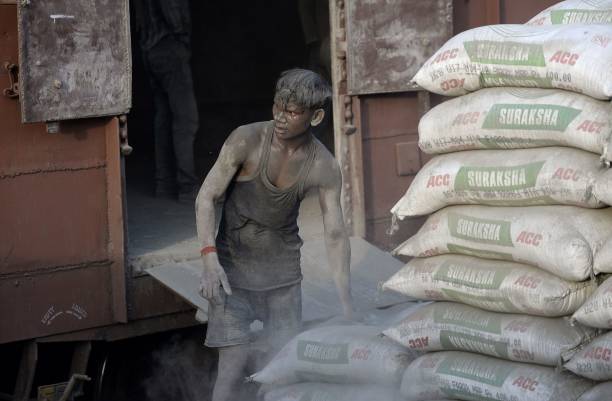
The valuation gap between Shree Cement Ltd and UltraTech Cement Ltd has continued to narrow. With that, the race for India’s most expensive listed Indian cement stock is getting exciting.
At a one-year forward EV/Ebitda of around 20 times, Shree Cement has managed to maintain the top spot, at least for now. EV is short for enterprise value. Ebitda is short for earnings before interest, tax, depreciation and amortisation.
UltraTech Cement is trading at a valuation multiple of around 17 times, shows Bloomberg data.
But with September quarter earnings a mixed bag and competitor UltraTech's slew of cost-rationalisation measures, Shree Cement’s tag of most valued listed Indian cement stock is at a greater risk.
In the September quarter, Shree Cement’s volumes declined 3.3% year-on-year (y-o-y) to 6.32 million tonne given its higher exposure to eastern India, which is facing a situation of over-supply. On the volume growth front, peers have performed better in the September quarter. Analysts note that Shree Cement’s volumes are lower than industry average, suggesting a marginal reduction in market share for the company.
However, a miss on volume was offset by higher blended realisation. Also, a one-time push to operating profit came from that sale of power in the spot market, which contained the decline in Ebitda to 11% y-o-y. Analysts note that Shree Cement maintained a meaningful differential in Ebitda margins over its peers (Ambuja and UltraTech) on back of higher share of cheaper renewable power, indirect tax incentives and logistics advantage.
"But the gap has contracted significantly over the last one year due to optimisation of realisations and extensive work on rationalisation of freight cost done by the peers. We believe that gap would further narrow down with a multi-fold increase in share of renewable power and further reduction in lead distance coupled with commissioning of new plants," analysts at Prabhudas Lilladher Pvt. Ltd said in a report.
Apart from its cost leadership, Shree Cement’s net cash position is also among the key factors supporting its premium valuations. But even there, Ultratech is fast catching-up; it is on a debt-reduction spree and continues to strengthen its balance sheet. UltraTech’s net debt increased by 6% sequentially, but declined 47% y-o-y to Rs6,300 crore as of September 2021. Net debt/Ebitda remained stable at 0.5times as of 2QFY22 from 1.3 times in 2QFY21.
"With strong operational cash flows, we estimate 4-6% free cash flow yield in FY2021-24E despite growth capex and to help Ultratech become net cash positive in FY2022E," said analysts at Kotak Institutional Equities.
And these factors have started to reflect in their valuations. Analysts at IDBI Capital Pvt Ltd highlight that Shree Cement’s valuation premium to UltraTech is at 45% compared to the highs at 80% and historical average of 40%.
Meanwhile, Shree Cement has guided to increase its capacity to 80mtpa from 46.4mtpa by 2030. Mtpa is short for million tonnes per annum. Investors should note that, contrary to its earlier policy of focusing on organic expansion, Shree Cement is actively exploring inorganic opportunities to meet the targeted capacity. On the other hand, in the case of UltraTech, analysts at Kotak point out that the company in the past added leverage for inorganic growth, but given that there is no major cement asset on the block, merger & acquisition is not a likely risk.
















0 Comment