
08 Mar , 2022 By : Kanchan Joshi
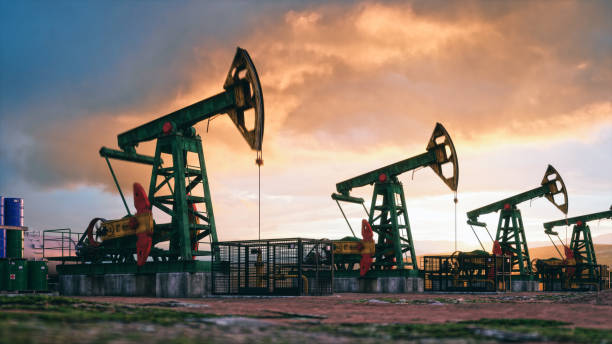
NEW DELHI: Global crude oil prices remained elevated but pulled back from their multi-year highs on Tuesday as traders sold to lock-in profits.
The May contract of Brent futures on the Intercontinental Exchange (ICE) closed at $123.21 per barrel on Monday, after touching $139.13, the highest the level since 2008. Brent had touched an all-time high of $147.50 a barrel in July 2008.
Around 0950 am, the contract was at $126.28 a barrel, up 2.49% from its previous close. The April contract of West Texas Intermediate (WTI) rose 1.68% to $121.41 per barrel on Tuesday.
While crude has been spiralling since Russia invaded Ukraine, prices surged on Monday after reports said that the US and European allies were looking at a ban on Russian oil imports.
High oil prices are a cause of concern for India, as the country imports 85% of its oil demand. The incessant rise in global prices have pushed up the Indian crude oil basket, comprising of Oman, Dubai and Brent crude. It was last recorded at $126.32 per barrel on 7 March, as per data from the Petroleum Planning & Analysis Cell of the Ministry of Petroleum and Natural Gas.
The increase has not been transferred to consumers so far, with the pump prices unchanged for the over three months now following the run-up to state polls. Market experts, however, believe that with elections having ended on Monday, oil marketing companies will increase retail prices of petrol and diesel anytime now.
In the national capital, petrol retailed for Rs95.41 a litre on Tuesday, while diesel sold for Rs86.67 per litre.
High crude prices will also impact India's current account deficit (CAD) to a great extend given its dependence on energy imports. An Icra report recently said CAD was likely to widen by $14-15 billion (0.4% of GDP) for every $10 barrel rise in the average price of the Indian crude basket.
"If the price averages $130/bbl in FY2023, then the CAD will widen to 3.2% of GDP, crossing 3% for the first time in a decade," it said.
the government is assessing the evolving geopolitical situation and will decide on cutting excise duty on fuels if the current surge in crude price lingers longer than can be absorbed by state-run fuel retailers.
The Icra report said if the Centre reinstates the excise duty on petrol and diesel to pre-pandemic rates, before 1 April 2022, followed by the budgeted rise of Rs2 per litre each on unblended fuel in H2 FY2023, the estimated revenue loss to the Centre in FY2023 would be around Rs90,000 crore.






















0 Comment