
11 Mar , 2022 By : monika singh
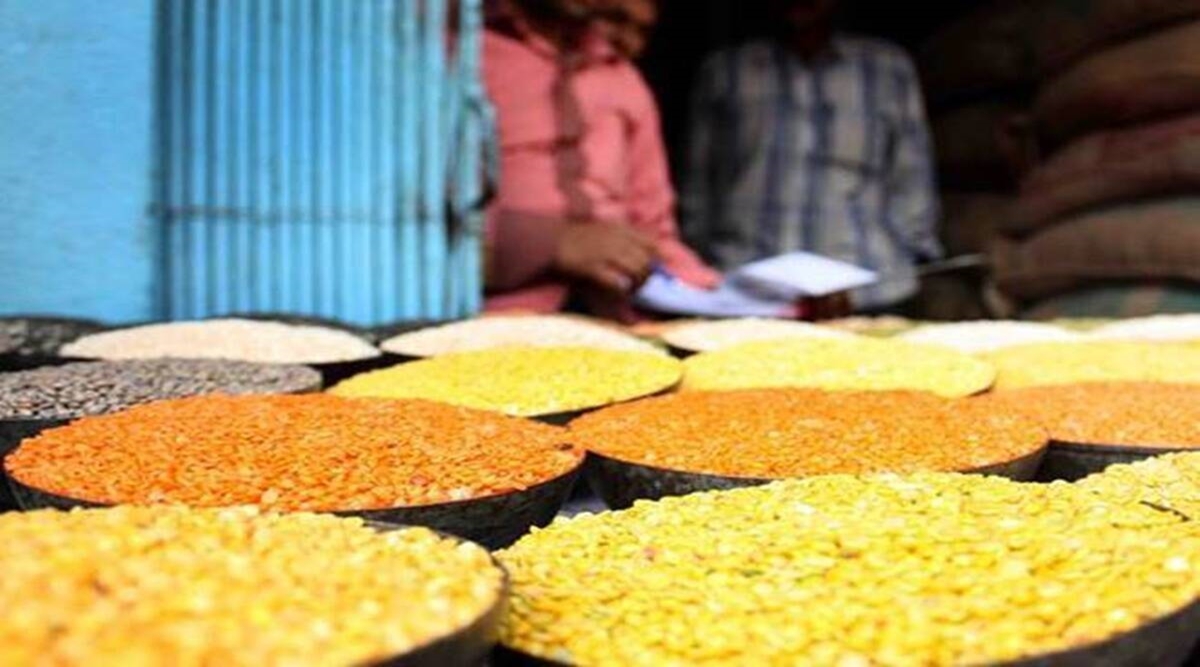
In a bid to ensure adequate domestic availability of pulses, the government is drawing up a comprehensive long-term policy, which will focus on increasing production, improving processing technologies for cutting down on post-harvest losses and ensuring farm gate procurement by processors.
The policy would also aim at bringing stability in the import tariff regime so that frequent changes in tariff structure does not impact the domestic production while ensuring that landed cost of imported pulses are around the minimum support price (MSP) announced by the government.
India meets about 10% of its domestic consumption of pulses through imports. In 2021-22 crops season, domestic production of pulses is estimated at 26.96 million tonne (mt) while around 2 mt of pulses import is anticipated in the current fiscal.
In anticipation of domestic shortfall in the output in May, 2021, India had put import of tur, urad and moong varieties of pulses under an ‘open’ from a ‘restricted’ category earlier till March 31, 2022. However, on February 12, 2022, moong was put on the ‘restricted’ list with immediate effect.
Traders told FE that such frequent policy changes disrupt the value chains as for import of pulses, long-term contracts are entered into prior to actual shipments. “Farmers also keep a close watch on imports before taking a decision on sowing,” a leading processor of pulses said.
As a part of developing a policy, the Department of Consumer Affairs on Thursday organised an interaction with leading pulses processors for exploring possibilities facilitating direct purchase from farmers, and of supporting modernisation of pulses processing plants to reduce post-harvest losses.
Official sources said that financially incentivising pulses-processing units is also being discussed. Besides, facilitating direct purchase from pulses farmers would be explored in coordination with states. Currently, states such as Maharashtra and Karnataka are providing electronic registration to traders or processors for direct purchase from the farm gate.
“Direct purchase from the farmers at their field ensures that transit losses are curtailed and technological upgradation could help efficiency to an extent,” Nitin Kalantry, MD, Kalantry Food Products, a Latur, Maharashtra-based processor of pulses, said.
According to the Central Institute of Post-Harvest Engineering and Technology report, the pre- and post-harvest losses in case of various varieties of pulses ranges between 4.3% to 6.1%.
“If we could not down on losses, the domestic availability of pulses will improve thus the import dependence,” a senior official said.
For augmenting domestic supplies, India signed an MoU with Mozambique for import of 2 lakh tonne of tur or arhar annually for five years when the retail prices of tur skyrocketed to Rs200 a kg in 2016. This MoU was extended for another five years in September 2021. In 2021, India entered into MoUs with Malawi and Myanmar for the import of 50,000 tonne and 1,00,000 tonne of tur per annum, respectively, till 2025.
India also imports lentils (masur) from Canada and Australia for augmenting domestic supplies. The country is in talks with Russia and Kazakhstan for imports of the lentils.
“Development of innovative pulses processing methods can increase the competitiveness of the industry thus augment domestic supplies,” Harsha Rai, director, Mayur Global Corporation, a global brokerage firm, said.



























0 Comment