
25 Mar , 2021 By : Debdeep Gupta
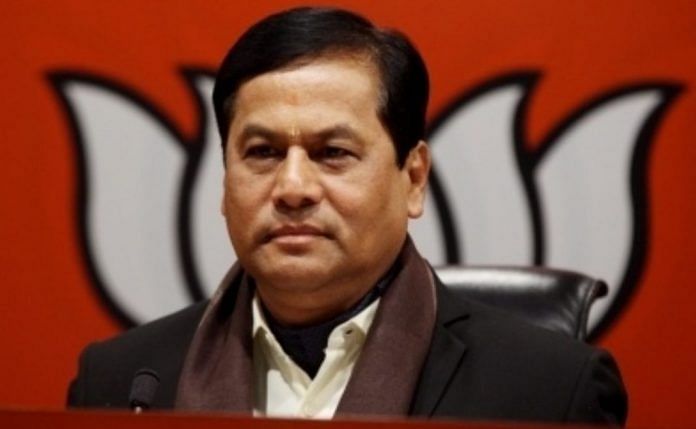
In the upcoming assembly elections in four states and a Union Territory, Assam happens to be the only place where the Bharatiya Janata Party (BJP) is contesting to retain power. The BJP is a challenger in all other places.
Five years ago, the party started establishing its dominance in the Northeast, by storming to power in Assam. However, repeating it may not be as easy as wresting it from Congress in 2016 after the latter's 15-year rule.
Follow our LIVE blog for the latest updates of the 2021 assembly elections campaign
A lot has changed on the ground in the last five years. Here are a few factors that may act as hurdles for the saffron party in its quest to retain power in Assam:
In the 2016 state election to the 126-member Assam Legislative Assembly, the National Democratic Alliance (NDA) included the BJP (which won 60 seats), Bodoland People's Front (12), and the Asom Gana Parishad (14). On the other hand, the Congress-led by then chief minister late Tarun Gogoi, managed to win 26 seats.
Member of Parliament Badruddin Ajmal's All India United Democratic Front (AIUDF), which contested separately, had won 13 seats.
During this election, the equations have changed. AIUDF and Congress have forged an alliance and have been joined by the BPF and other smaller parties. The NDA now comprises the BJP, the AGP, and the United People's Party Liberal (UPPL) led by Pramod Boro.
The Congress-led 'Mahajot' alliance may appear to be a formidable force to reckon with if we merely add up the 2016 vote share of its components.
The BJP had garnered a vote share of 29.51 percent, followed by the AGP's 8.14 percent and the BPF's 3.94 percent. Together, they cornered 41.49 percent of the total valid votes polled in 2016. On the other side, Congress got 30.96 percent votes and the AIUDF won 13.05 percent.
In the changed scenario, where the BPF has joined the opposition alliance, the BJP-led alliance’s vote share could fall to 37.65 percent — simply assuming that the vote share numbers remain the same. The Mahajhot on the other hand could have a whopping 47.95 percent vote share, going by the 2016 numbers — far more than the BJP-led alliance's. The difference would be around 10 percentage points.
Hence, at least on paper, the Mahajot may appear to be a difficult force to beat for the BJP. However, it is to be noted that voters do not necessarily transfer their votes en masse and it is subject to various factors.
However, the opposition alliance does have a few advantages. Firstly, it is the AIUDF's confidence in swaying the majority of Muslim votes towards the opposition alliance. Muslims constitute about 35 percent of the state's population. The alliance may expect to win the votes of Muslims, particularly those living in southern Assam's Barak Valley. However, this can prove to be a double-edged sword as the alliance may stand to lose Hindu votes due to possible polarization in Upper Assam.
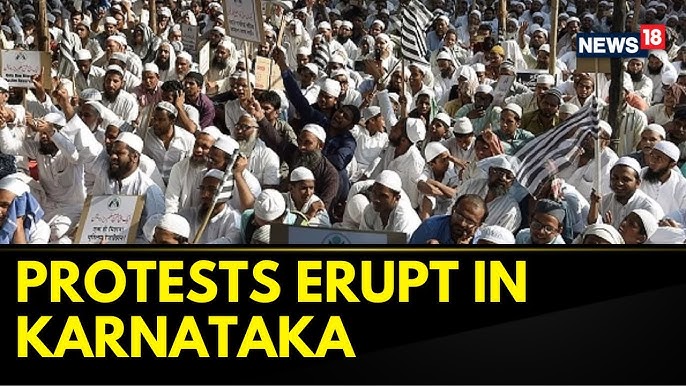
The alliance's second key advantage is a possible anti-BJP sentiment among voters due to the fallout of the Citizenship Amendment Act (CAA). The CAA, which is yet to be implemented, remains unpopular and had led to massive protests in the state in 2019-20.
Another interesting point to be noted is the rise of two new political parties from the anti- CAA movement: Assam Jatiya Parishad (AJP) and Akhil Gogoi's Rajor Dal. They are fighting the election under the United Regional Front (URF) banner. This, however, may end up taking away some anti-BJP votes for the Mahajot.
Both, the NDA and the Mahajot have not declared a chief ministerial candidate. But this may particularly affect Congress as it is a challenger in this election.
The Congress's campaign has also focused on the alleged patronage given by BJP to big corporates "from outside". It has launched the ‘Assam Bachao’ campaign alleging that the BJP government is “selling out the state to outsiders”.
NDA without BPF
BPF leaving the NDA to join the Mahajot may negatively impact the BJP. The seed of this 'break-up' was said to have been sowed in December 2020 during the local body polls. BJP joined hands with the UPPL, instead of their ally BPF, eventually leading the two parties to part ways.
BPF's Hagrama Mohilary served as the Chief Executive Member of the Bodoland Territorial Council from 2003 to 2020. It remains the single largest party in the autonomous district council that governs the Bodoland Territorial Region.
New parties in fray
Many new regional parties that are linked to Assam's ethnic nationalism have entered the fray, trying to fill a possible political vacuum among Assamese speaking voters.
Two such parties -- AJP and the Raijor Dal -- could prove to be game-changers. The Rajor Dal is being spearheaded by jailed anti-CAA activist Akhil Gogoi, who is considered influential in some pockets of the state comprising a higher concentration of the native population.
The AJP has been formed by the All Assam Students' Union (AASU) that has spearheaded the cause of Assamese ethnic nationalism for the past four decades.
Anchalik Gana Morcha (AGM), another regional party, is fighting this election with Congress.
However, the formation of these new outfits also seals a subplot of Assam politics – the perceived fall of BJP's ally AGP, a party that once shaped ethnic nationalism in the state. The Prafulla Kumar Mahanta-led party, which once held the Assam chief minister's position, is only contesting 26 seats this time.
Citizenship Amendment Act
The BJP is facing serious hurdles when it comes to the CAA. According to the amended citizenship law, members of Hindu, Sikh, Buddhist, Jain, Parsi and Christian communities who came from Pakistan, Bangladesh and Afghanistan till December 31, 2014 and were facing religious persecution there will not be treated as illegal immigrants and will be eligible for Indian citizenship. The law excludes Muslims.
Those opposing the amended law say it discriminates on the basis of religion and violates the Constitution. They also allege that the CAA, along with the proposed pan-India National Register of Citizens (NRC), is intended to target India’s Muslim community.
Protesters in Assam have claimed that the CAA negates the ongoing NRC exercise in the state and will be against the Assam Accord.
However, the BJP-led central government has dismissed these allegations, maintaining that the law is intended to give citizenship to the persecuted people from the three neighbouring countries and does not take away citizenship from anyone.
Assam had witnessed massive anti-CAA protests in late 2019 and early 2020. The influx of non-indigenous Bengali population has been a fraught subject in the state, and the primary reason for the updated NRC.
Hence, the BJP has avoided mentioning the CAA in its election campaign so far. In the party manifesto released on March 23, BJP said that it will initiate a process to "correct and reconcile" the entries made as part of the Supreme Court-mandated NRC exercise, as it seeks to "protect genuine Indian citizens and exclude all illegal immigrants".
On the contrary, in West Bengal, the party has declared in its manifesto that it will implement the CAA if it comes to power there.
BJP's 'dual leadership' and anti-incumbency
With CM Sonowal and state minister Sarma leading the poll campaign, the BJP is being seen as having a 'dual leadership' structure in the state. The party has not declared a chief ministerial candidate, saying it does not need to per say, as it is already in power.
While relations between the two have largely remained cordial, there have been reports of occasional pinpricks and the BJP is said to be walking a tightrope on the matter.
Congress has used this 'dual leadership' to criticise the BJP, calling it a "double-chief minister government".
Additionally, there may be some level of anti-incumbency against BJP MLAs at the constituency level. The Quint cited an ABP News-CVoter survey as saying that nearly 29 percent of voters were not satisfied with their local legislator.
















0 Comment