
30 Mar , 2026 By : Debdeep Gupta
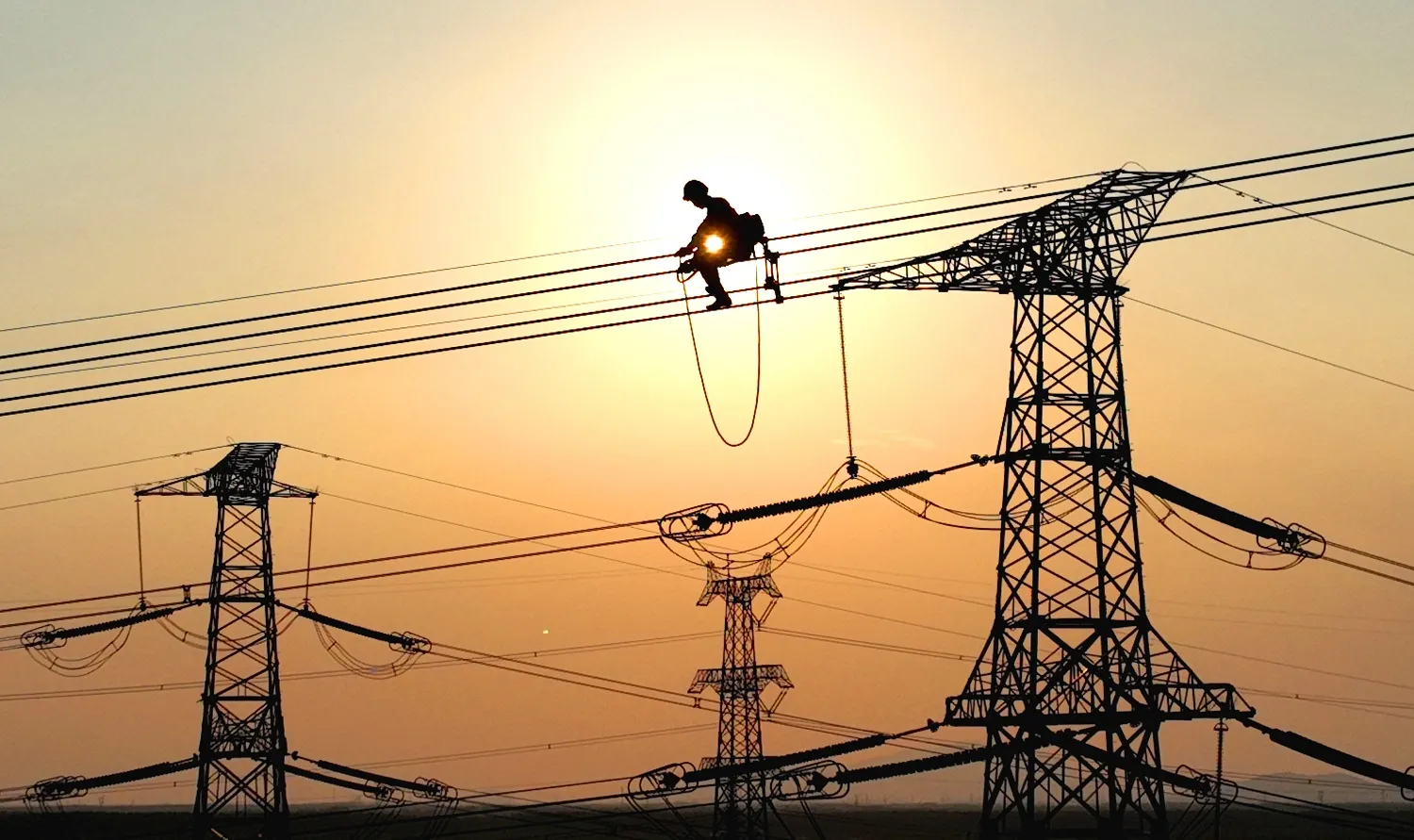
India’s power sector is holding steady even as global energy markets remain volatile, with strong domestic demand and a gradual shift toward cleaner sources supporting the outlook.
“This sector is a domestic consumption-led industry,” said Rupesh Sankhe of Elara Securities, adding that demand across industrial, commercial, agricultural and residential segments remains robust. Power demand has risen from about 220 gigawatts (GW) in December to nearly 235 GW.
Axis Securities also pointed to the strength in underlying demand. “Underlying demand remains firm, supported by rising industrial activity, appliance penetration and urbanisation,” the brokerage said.
Recent brokerage estimates suggest the trend has staying power. According to Centrum Broking, electricity consumption has grown at about 7.4% annually between FY21 and FY25 and is expected to expand at 6–6.5% a year through the rest of the decade, driven by cooling demand, electric vehicles, data centres and industrial growth.
Global cues support domestic consumption
Global factors are also feeding into domestic demand. “Due to gas shortages, some demand that depended on imported LNG has shifted back to grid power,” Sankhe said, adding that this has strengthened overall power consumption. Axis Securities said “higher natural gas prices could aid domestic volume growth.”
The sector is also drawing attention as a relatively stable pocket in an otherwise uncertain market. “Earnings in this sector are more predictable, unlike others where downgrades are possible,” Sankhe said.
Centrum Broking noted that long-term power purchase agreements continue to anchor cash flows and provide visibility on earnings for utilities.
Demand outlook remains strong
Long-term projections remain strong. While industry estimates peg electricity demand growth at around 6–6.5% annually, Centrum Broking expects peak demand to rise from roughly 240 GW at present to as much as 335–366 GW by 2030.
Near-term triggers remain intact. Axis Securities said “peak power demand is projected at ~270 GW this summer,” a step-up from last year.
A key macro factor could further tighten the demand-supply balance. “El Niño conditions are likely to be positive for thermal generators,” Axis Securities said, noting that higher temperatures tend to drive demand while weaker monsoons reduce hydro output.
Capex push and energy transition
At the same time, the sector is entering a heavy investment phase. Centrum Broking highlighted a structural expansion in transmission and grid infrastructure, driven by the need to support rising demand and renewable integration.
The transition to renewables is also underway. “We are already in the process of green transition, and dependence on crude oil and gas imports is pushing further toward alternatives like solar and nuclear,” Sankhe said.
Valuations diverge across segments
On valuations, Sankhe said renewable energy companies have corrected meaningfully over the past 12–18 months and could see interest return if demand remains stable. Conventional power players like NTPC, according to analysts remain at reasonable valuations and remain insulated from global uncertainity due to regulated equity.
Data across listed power and energy companies shows a divergence within the renewable space. Among wind and EPC players, valuations have cooled from earlier peaks with Suzlon Energy Ltd now trading at a price-to-earnings multiple of about 27 compared with over 60 at its peak, while Inox Wind has declined to around 30 from above 50. Sterling and Wilson Renewable Energy has also seen moderation in its multiples.
However, elevated valuations persist in other parts of the renewable and energy transition chain. Adani Green Energy is currently trading at a price-to-earnings multiple of over 100, well above its earlier peak of around 76, while Inox Green Energy Services Ltd trades at significantly higher multiples than its historical levels.
In contrast, conventional utilities remain relatively stable. Companies such as NTPC and Power Grid Corporation of India continue to trade close to or below their historical averages, reflecting steady earnings visibility and regulated return frameworks.
Centrum Broking said the correction in parts of the renewable space has improved the risk-reward for select companies, particularly those with strong execution capabilities and visible project pipelines.
Execution risks, demand key trigger
Still, execution remains a key risk. Centrum Broking cautioned that transmission capacity will need to keep pace with generation, while land acquisition and supply-chain constraints could delay projects.
For now, demand remains the main trigger. “If peak demand crosses 275–280 GW, the sector could see strong upside,” Sankhe said, adding that gains may otherwise remain selective.































0 Comment