
30 May , 2022 By : Debdeep Gupta
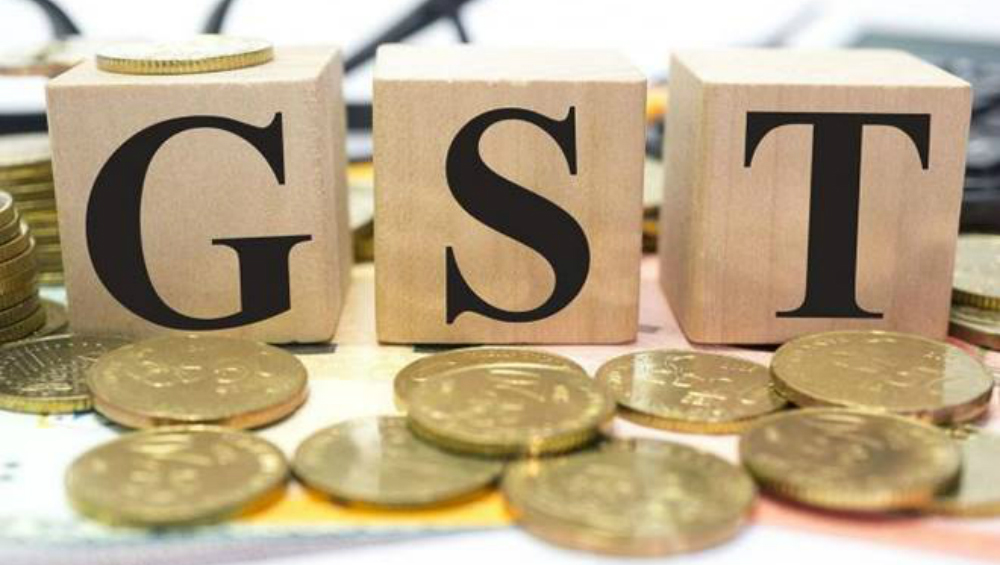
Domestic rating agency India Ratings on Monday said the GST has not helped states achieve the key objective of boosting their tax revenue.
The rating agency said that the data does not point to any benefits to the states in the last five years since the implementation of GST (Goods and Services Tax).
From June this year, the Centre will stop giving states any compensation for tax collection shortfall.
GST compensation for a five-year period was part of the agreement between states and the central government at the time of the roll-out of the new indirect tax regime in 2017.
Several states have asked for an extension of the GST compensation.
However, finance minister Nirmala Sitharaman, while presenting the Budget for FY23, has already said that the compensation period will not be extended beyond June 2022.
"The data available so far does not instill confidence with respect (of) GST achieving or is on course to achieve its two key objectives, namely it boosts the tax revenue and is beneficial for the consuming states,” the rating agency said.
The share of state GST (SGST) in States’ Own Tax Revenue (SOTR) at 55.4 percent during FY18-FY21 compared to 55.2 percent during FY14-FY17 indicates that the growth in both SGST and non-SGST components of SOTR has been broadly similar, it said.
"This means the GST implementation did not result in any incremental benefit to the SOTR. Moreover, SGST growth at an average of 6.7 percent during FY18-FY21 has been lower than the 9.8 percent growth recorded by the taxes subsumed under GST during FY14-FY17,” it added.
Until the GST implementation, producing/exporting states used to collect VAT (sales tax) on the sales within the states and also Central Sales Tax (CST) of up to 2 percent on the inter-state sales, it said.
States, where CST was contributing more than 4.5 percent to their SOTR during FY12-FY17, were Assam, Chhattisgarh, Gujarat, Haryana, Himachal Pradesh, Jharkhand, Meghalaya, Odisha, Sikkim, and Tamil Nadu – a mix of both producing and consuming states.
"After the GST implementation, the proportion of CST in SOTR declined to 0.95 percent in FY21 (RE) from 4.16 percent in FY17,” it said.
The agency said another way of assessing the GST performance of states is to examine the SGST growth during FY19-FY22, and pointed out that Odisha is the only state having an average SGST collection exceeding 14 percent with a 20.06 percent growth in SGST between FY19-22, and is followed by Bihar (13.89 percent), Assam, Andhra Pradesh, and Chhatisgarh.
A total of 17 major states recorded average SGST growth of below 10 percent, while Uttarakhand recorded negative average SGST growth of 4.02 percent during FY19-FY22.























0 Comment