
11 Jun , 2022 By : monika singh
Fitch Ratings on Friday revised up its outlook for India’s long-term foreign currency Issuer Default Rating (IDR) to ‘stable’ from ‘negative’ after a gap of two years. But it has retained its sovereign rating for the country at the lowest investment grade of ‘BBB-‘ for 16 years now.
The agency’s improved outlook followed its assessment that downside risks to medium-term growth have diminished due to India’s “rapid economic recovery and easing financial sector weaknesses”, despite near-term headwinds from the global commodity price shock.
With this, Fitch joined its peers S&P and Moody’s in assigning similar ratings and outlook for India.
However, the agency trimmed its FY23 India growth forecast to 7.8% from 8.5% announced in March, stating that elevated inflationary pressure has dampened the growth momentum. The scaled-down estimate will still be way above the agency’s 3.4% median growth projection for similar-rated peers.
“India’s strong medium-term growth outlook relative to peers is a key supporting factor for the rating and will sustain a gradual improvement in credit metrics,” Fitch said.
Between FY24 and FY27, it expected India’s real growth to be around 7%, underpinned by the government’s infrastructure push, reform agenda and easing pressures in the financial sector.
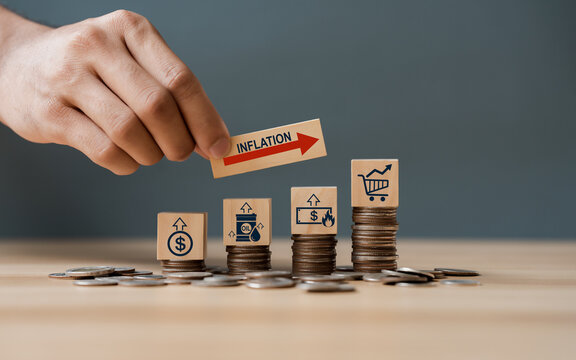
Fitch forecast inflation to average 6.9% in FY23, against 5.5% in the previous year, due to a rise in global commodity prices. The agency expected the central bank to continue to raise the repo rate to 6.15% by the next fiscal from 4.9% now. The RBI this week hiked the repo rate by 50 basis points to 4.90%, the second increase since May, and raised its FY23 inflation forecast to 6.7% from 5.7%.
Higher oil import bill could drive up the country’s current account deficit to 3.1% of GDP in FY23 from just 1.5% last fiscal, but resilient exports could mitigate deterioration. However, despite elevated oil prices, external risks remain relatively well-contained due to RBI’s forex buffer, which, of course, could ease to $563 billion in FY23 from $607 billion a year before.
While high nominal GDP growth has facilitated a short-term drop in the country’s high debt-to-GDP ratio, “public finances remain a credit weakness with the debt ratio broadly stabilising, based on our expectation of persistent large deficits”. “The rating also balances India’s external resilience from solid foreign-exchange reserve buffers against some lagging structural indicators,” it said.
Aided by a sharp acceleration in nominal GDP growth in the short term, India’s elevated debt-to-GDP ratio could drop to 83% in FY23 from as much as 87.6% in FY21. However, it still remains high compared with the 56% peer median. “Beyond FY23, however, our expectations of only a modest narrowing of the fiscal deficit and rising sovereign borrowing costs will push the debt ratio up slightly to around 84% by FY27, even under an assumption of nominal GDP growth of around 10.5%,” it said.
Fitch predicted that the recent fuel excise duty cuts and increased subsidies (about 0.8% of GDP) will push up the central government deficit to 6.8% of GDP, against the budgeted target of 6.4%, despite robust revenue growth.
The agency expects the general government fiscal deficit to narrow at a modest pace over the next several years, reaching 8.9% of GDP by FY25. The central government’s plan to rein in its fiscal deficit at 4.5% by FY26 “could prove challenging”.
At 26%, the high share of interest payment in government revenue in FY22, compared with a median of 7% in similar rated peers, constrains India’s fiscal flexibility, particularly in the context of rising sovereign bond yields.
The agency acknowledged that India’s foreign-currency government debt comprises only 5% of its total debt (BBB median is as high as 33%) and only 2% of government securities are held by non-residents. “However, sustained large fiscal financing needs are likely to contribute to a crowding out of private-sector lending and higher borrowing costs,” it said.
The country’s financial sector pressures are easing and potential asset-quality deterioration from the pandemic shock appears manageable. But there are risks as forbearance measures unwind, the agency said.



























0 Comment